WHY SHOULD ARTISTS UNIONISE?
Artists are underpaid and overexploited.
The art system is built on our un- and under-paid labour. The structures of the art world, and the gatekeepers who draw the biggest salaries from it, depend on our work and the cultural capital we generate.
On average, artists earn as little as £2.60 an hour from projects funded by public institutions (Industria, 2023). Research has repeatedly shown that artists earn less than £15,000 a year from all types of work (DACs, 2024; Industria and AUE, 2025).
Lack of pay often comes hand in hand with poor working conditions – from discrimination, to workplace safety, to a lack of practical and emotional support, to the expectation to overdeliver – compounding a sense of disrespect and exploitation.
These are not liveable wages. This is not acceptable treatment. The only way to combat these conditions is to organise.
A union is an organisation of people who come together to represent their collective interests, providing a unified voice to collectively bargain for better conditions.
An artists’ union can change this.
The way the system shapes our work as artists means we are often atomised and individualised: pitted against each other in apparent competition for opportunities, funding, and wages, and squeezing our artistic practice in amongst day jobs and commitments to our friends and families.
This puts us in an often lonely and vulnerable position, where it can be easy to feel disheartened and disaffected. Artists’ unions collectivise the struggle, building a network of artists with the understanding that the failings of the art world are systemic and not personal.
Organising democratically as artists within a dedicated union means we are organising on the broader terms of our needs as a class of workers. This means we can work together to re-organise the arts against the terms that keep us precarious and unequal.
It means we are able to organise around the specifics of our precarious and unequal sector, whilst recognising that it is not uniquely precarious and unequal. By unionising as artists we can fight for fair pay and working conditions and much more broadly, participate in the fight for a fairer world.
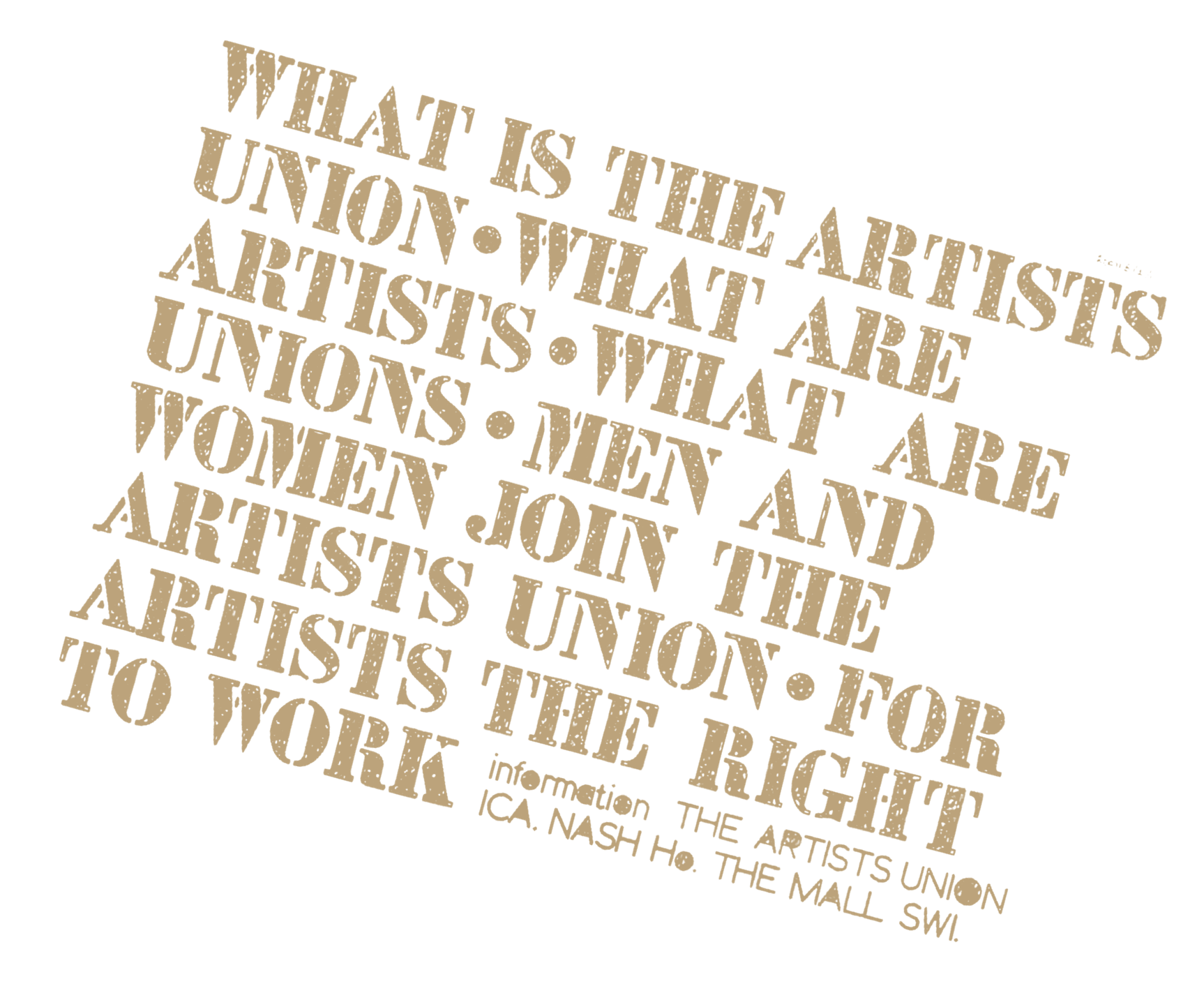
I welcome the formation of the Artists’ Union as another important ally for the T.U. [Trade Union] movement and the working class as a whole. The establishment of this Union is yet another sign of the growing awareness of white collar workers of the need to engage in class struggle. I wish them every success in the inevitable battles in which they will have to engage.
Trade Unionist Mike Cooley speaking in 1972 on the formation of the original Artists Union (1972–1984)
The only way to combat these conditions is to organise.
Membership costs £48 annually, equivalent to £4/month
Joining the union is building the union.
A union is its members: the more artists that decide to join AUE, the more the union can do.
Our generally precarious lives, in which we juggle finding time to be practicing artists amongst ‘bread and butter’ jobs and other responsibilities, mean we all have varying capacities. However much time you’re able to dedicate to organising together as artists and workers, you are still an essential part of the collective effort to change our material conditions.
Here are some ways you can engage:
Join the union! (and tell a friend)
Even just joining the union and paying your subs as a long-term member makes a difference. Your subs resource AUE, meaning we can take on more workers to support the day-to-day running of the union and build our capacity to campaign, mobilise, and organise. The more members AUE has, the stronger we get, and the louder our collective voice as organised artists becomes.
Negotiate Using The Recommended Rates Of Pay
The more AUE’s Recommended Rates of Pay get used in negotiations with commissioners and institutions, and the more artists cite their membership of the union, the closer we get to a kind of ‘collective bargaining’, meaning industry standards are shaped by us, for us.
Engage democratically
Submitting proposals to the Annual General Meeting and voting on them is the main way members currently shape the agenda of the union. At the annual AGM, all members can discuss and vote on motions to determine the priorities of our union going forward.
Put Yourself Forward For The National Executive Committee
Every 2 years the union holds elections for the National Executive Committee. If you are elected by the membership you will become part of a collective that represents the membership in guiding the future direction of the union and fighting for our collective interests.
Join campaigning and organising efforts
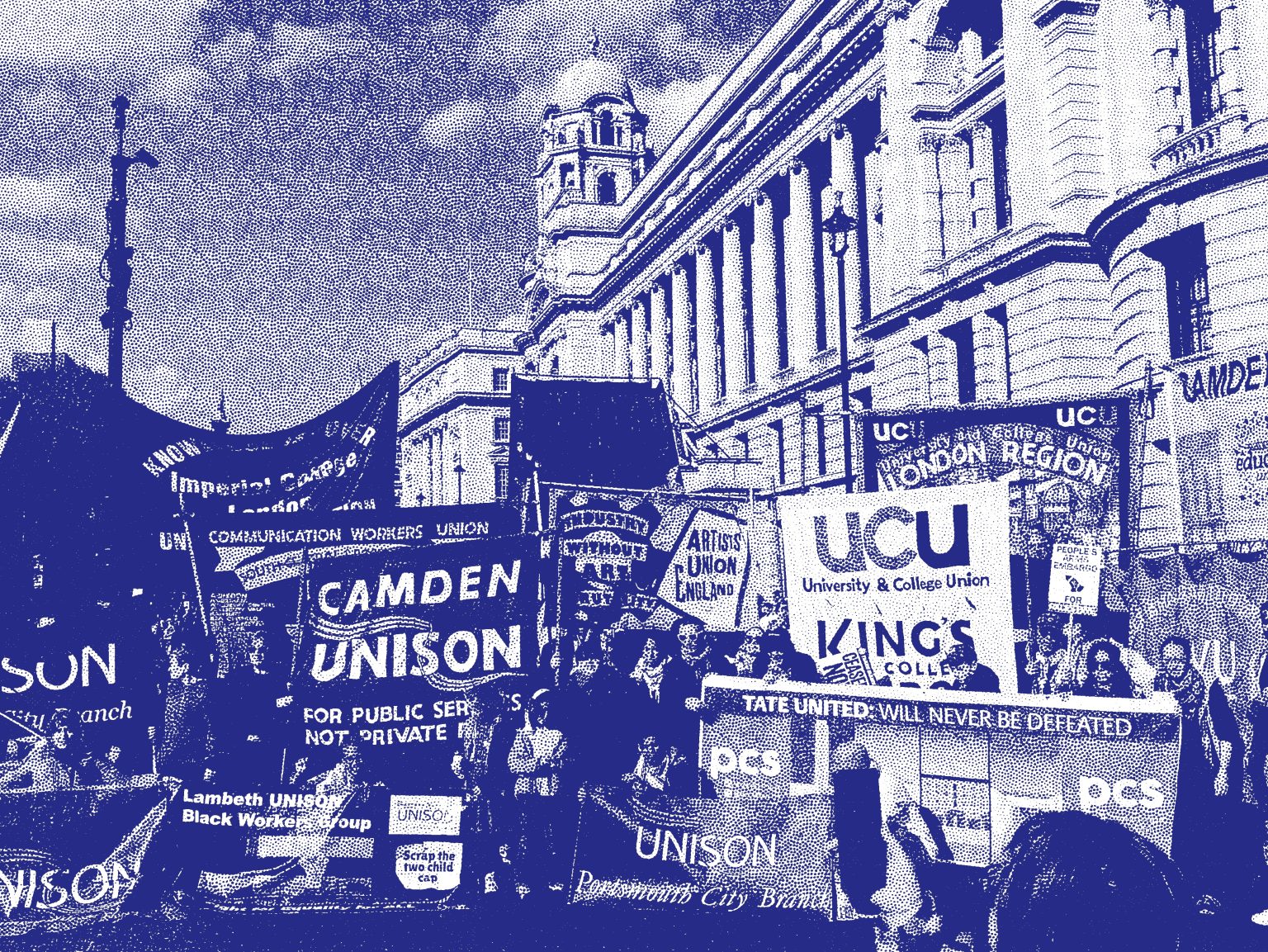
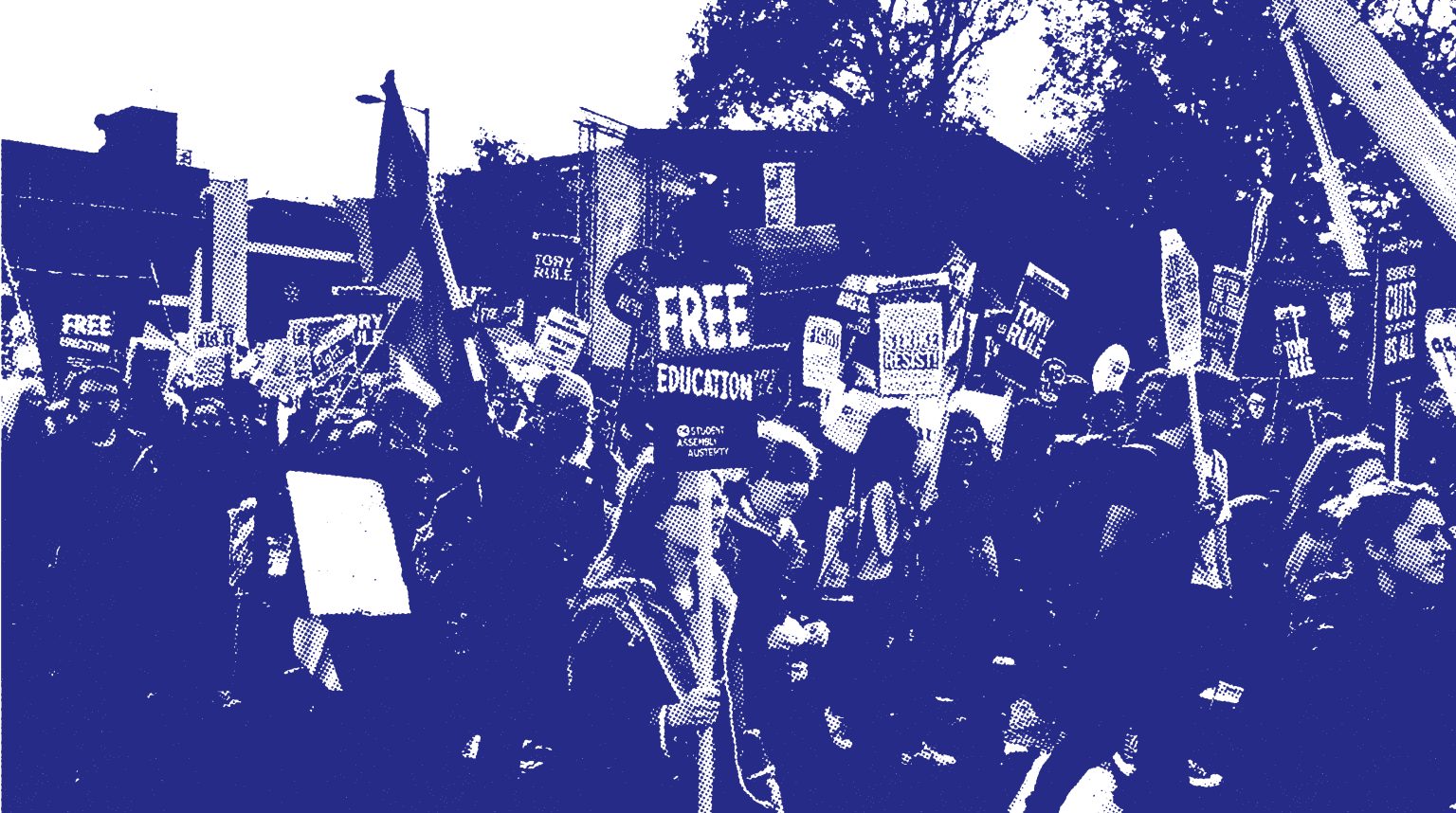
Joining and organising union campaigns and working groups, marching with the AUE banner at demonstrations and standing on picket lines in solidarity with other workers, engaging in regional organising networks, or putting yourself forward to represent the union at TUC conferences… all this work strengthens the union and builds lines of solidarity with other workers.
Organise a union branch
AUE is growing – over the next few years we will be facilitating branch structures so members can come together to organise around local and sector specific issues, building a robust and thriving union democracy from the grassroots.
Email the office team if there’s something you want to get involved in or find out more about
To think of the union as a distinct, unknowable body that will step in when times get tough is to misunderstand its purpose and existence. No infrastructure, marketing, elected representative or strike means anything without the strength in numbers of a united workforce who have made a commitment to one another. We, standing together, have the power to influence what the union believes, how it behaves, if and when it acts, and whether it wins. A union is a dynamic, living, breathing pact that only exists as its members.
Eve Livingston, Make Bosses Pay: Why We Need Unions (Pluto Press, 2021)
Organising to win
Work as an artist with the protection and collective power of a trade union
Membership costs £48 annually, equivalent to £4/month
‘What do you value most about being a member of AUE?’
“Feels good to have support behind me as being an artist can often feel quite lonely and anxiety-inducing. If I don’t have work and a community then what will I do??”
“Solidarity, being able to be a part of a union that can represent artists and act quickly to address issues of concern to us. Being a newer, smaller union allows us to reinvent the wheel and avoid some of the hierarchy and bureaucratic mistakes of larger more established unions.”
“Collective action and bargaining is so important for all workers!”
“Feeling part of a push for solidarity between artists and the broader labour movement.”
“Community, discovering support I didn’t know was available, getting to feel like I have a voice without fearing that I will lose employment offers. Honestly I swear that just adding that I’m an AUE member to my invoices guarantees that I’m more likely to get paid on time.”
“Solidarity with other cultural workers, the peace of mind that membership of a trade union fighting to improve our pay and working conditions affords and having an active voice within the arts industry at large that is independent of those that employ and engage us, is vital.”
“Being supported in a case if badly treated by an org or institution, having industry experience and knowledge to draw from. My current experience being supported by AUE in a case against ACE has been amazing.”
“The union’s collective voice means I don’t sound like I’m pulling numbers or policies out of my head when negotiating contracts.”